Andrea Mariani
Giulia Copercini
Diego Ravier
Ruggiero Scardigno
Diego Ravier
Andrea Mariani
Diego Ravier
Aurea_Salone del Mobile.Milano 2026_illustration_MN20
Aurea_Salone del Mobile.Milano 2026_illustration_MN20
Aurea_Salone del Mobile.Milano 2026_illustration_MN20
More photos
The 2026 edition of Salone del Mobile.Milano marks one of the most profound reorganisations in the fair’s history.
Taking place from 21 to 26 April at Rho Fiera Milano, Salone moves away from spectacle and scale for their own sake, placing emphasis instead on a clearly articulated structure that frames design as a complex ecosystem—where industry, research, culture and contemporary ways of living intersect.
Rather than following a linear exhibition model, Salone 2026 introduces a multi-layered approach: thematic sections, curated platforms and long-term research projects that operate in parallel. In doing so, the fair consolidates its role not merely as a showcase, but as a space where design is interpreted, questioned and systematised.
SaloneSatellite 2026: Craft Knowledge as a Contemporary Tool
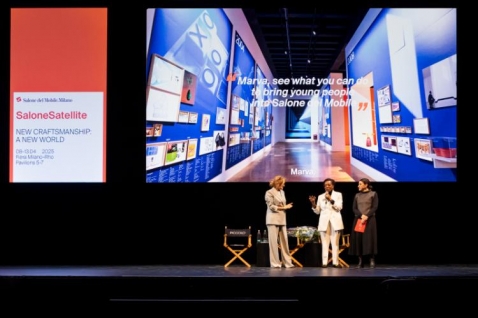
For more than two decades, SaloneSatellite has functioned as a space of experimentation and anticipation. In 2026, it brings together 700 designers under the age of 35, alongside 23 international schools and universities, reaffirming its role as a global platform for emerging authors.
The theme “Maestria artigiana + Innovazione” places craftsmanship at the centre of contemporary design discourse—without nostalgic intent. Craft is instead understood as operational knowledge: a set of skills that enable precision, material control and process awareness, even within advanced technological and digitally driven production contexts.
Projects presented within SaloneSatellite explore hybrid modes of practice: where handcraft meets algorithmic design, where local knowledge intersects with global frameworks, and where authorship increasingly becomes collective. The result is a scene that rejects stylistic uniformity in favour of methodological diversity.
Aurea: Architectural Fiction as a Tool for Spatial Thinking
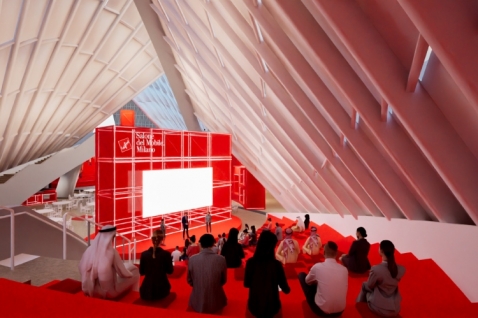
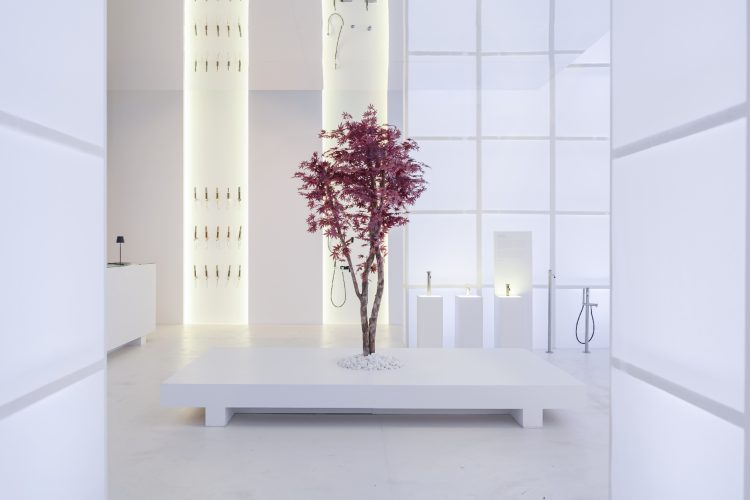
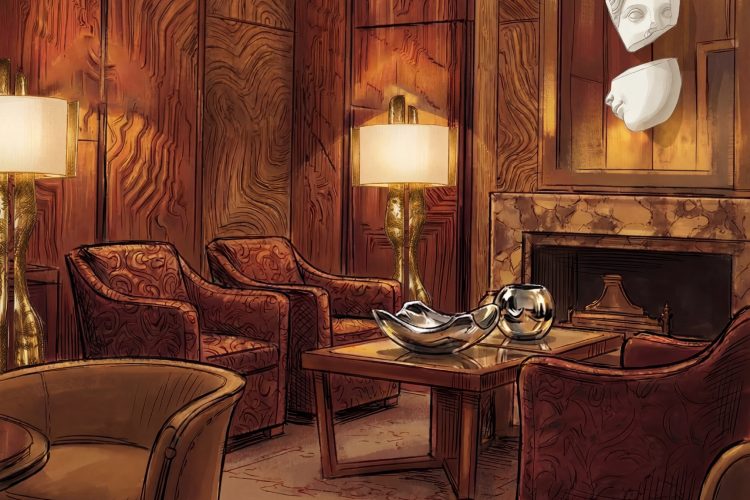
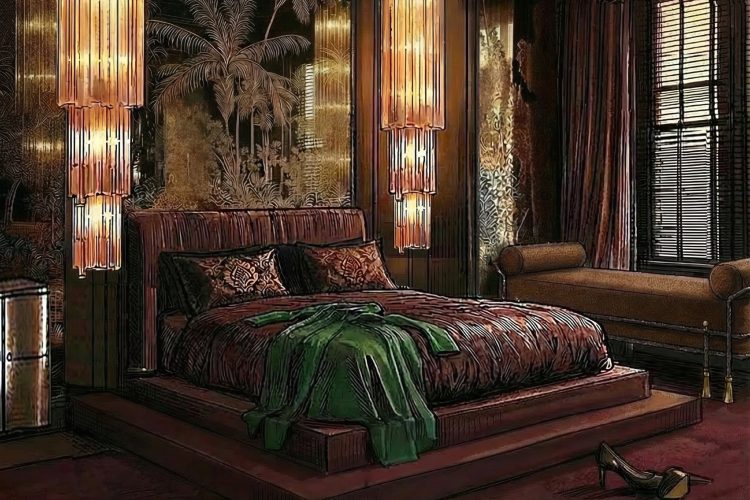
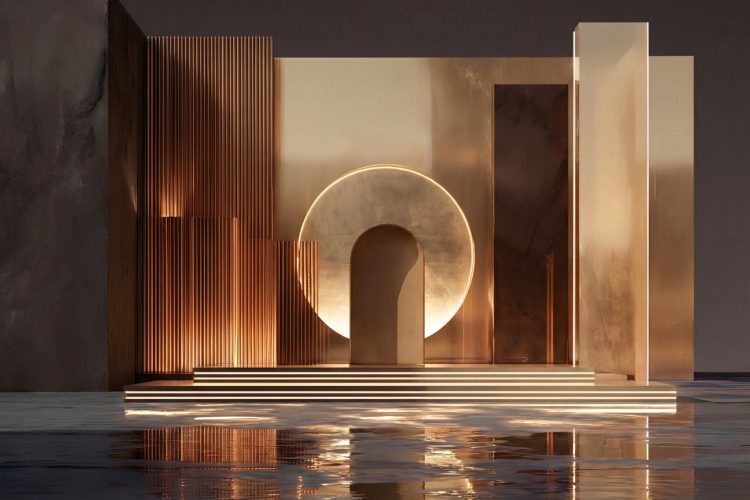
Within the thematic framework A Luxury Way, located in pavilions 13–15, the installation “Aurea, an Architectural Fiction”—designed by Maison Numéro 20—acts as a central spatial statement. Rather than a conventional exhibition, the project operates as a narrative environment, using architecture as its primary medium.
“Aurea” is conceived as an imaginary hotel: a sequence of interconnected spaces that unfold as chapters of a story. Each room possesses its own identity while remaining part of a continuous spatial flow. Interiors are experienced not as static compositions, but as evolving environments shaped by light, materiality and rhythm.
The installation’s visual language draws on layered references—20th-century architectural heritage, cinematic scenography and elements of surrealism—used not as quotations, but as tools for rethinking the contemporary relationship between space and emotion. Light plays a central role, treated as an active architectural element that defines perception and spatial boundaries.
Salone Raritas: Redefining Collectible Design
One of the most significant novelties of Salone 2026 is the debut of Salone Raritas, located in Pavilion 9. This new platform focuses on design situated at the intersection of industrial production, craftsmanship and author-led research.
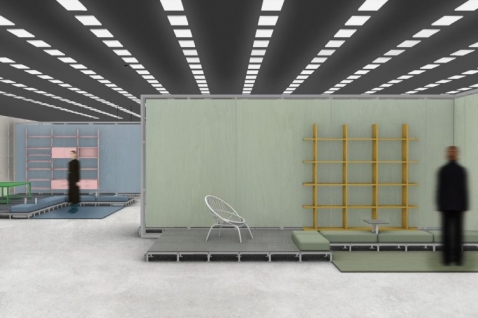
Raritas brings together a strictly limited number of exhibitors, selected according to clear curatorial criteria. The presentation includes unique pieces, limited editions and experimental works that fall outside conventional market categories. The architectural setting is restrained and neutral, directing attention to material qualities, proportions and conceptual clarity.
Rather than functioning as a traditional gallery, Raritas operates as a professional tool—a point of convergence for designers, producers and specifiers working with highly specific, non-standard solutions. Here, rarity is not an aesthetic label but a methodological principle.
Salone Contract: Mapping the Complexity of Contemporary Projects
In contrast to Raritas, which is immediately visible through a new exhibition format, Salone Contract unfolds as a long-term strategic initiative. Its aim is not to introduce another section, but to understand and structure the contract sector within a contemporary framework.
The project’s masterplan has been entrusted to OMA, under the direction of Rem Koolhaas and David Gianotten. Their research focuses on systems: how design operates within large-scale projects, how different stakeholders interact, and how value shifts from individual products to integrated services, logistics and technologies.
Throughout 2026, Salone Contract will take shape through thematic itineraries, forums and research-driven content, laying the groundwork for its full exhibition debut in 2027. This approach underscores the need for new models of collaboration and planning within complex architectural and urban environments.
Salone 2026: An Open Structure for Contemporary Design
Salone del Mobile.Milano 2026 does not propose a single narrative, but an open structure. Through platforms such as SaloneSatellite, Aurea, Raritas and Salone Contract, design is framed as a process, a method and a system of relationships.
It is within this layered complexity that the strength of the 2026 edition lies. Rather than offering conclusions, Salone establishes a framework in which diverse practices can evolve in parallel—remaining in dialogue with industry, culture and society.