More photos
Loro Piana’s new Fall/Winter 2026–2027 campaign makes no attempt to capture attention with oversized logos or fashion spectacle.
Instead, the Italian house travels to Houston, where photographer Mario Sorrenti draws on the cultural legacy of the de Menil family to bring fashion, art, architecture and everyday life together in a sophisticated story about contemporary quiet luxury.
There are cities that provide little more than an attractive backdrop for a campaign, and there are those that give it an entire story. For Loro Piana, Houston belongs firmly in the latter category.
Photographed by Mario Sorrenti, the Fall/Winter 2026–2027 campaign takes us through locations associated with John and Dominique de Menil, collectors and patrons whose influence left a profound mark on the cultural landscape of this Texas city.
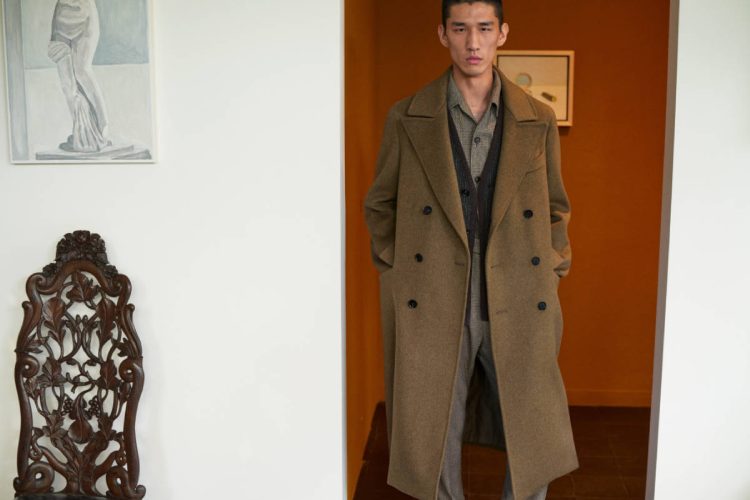
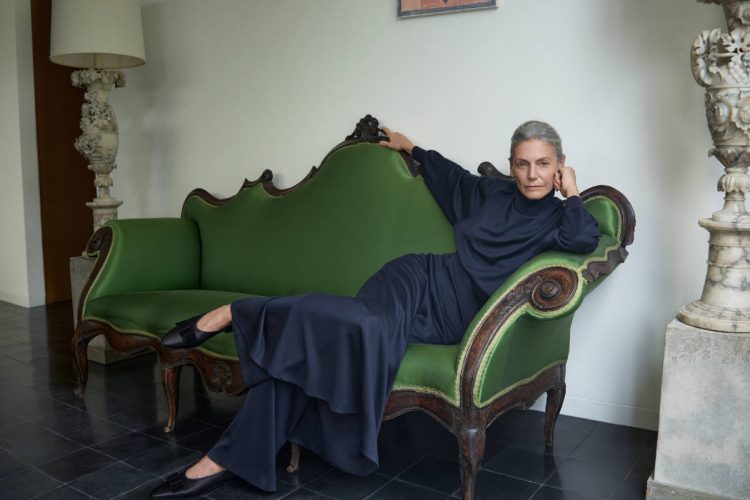
The result is not a conventional fashion campaign in which architecture merely serves as decoration. The clothes move through these spaces, become part of them and accompany people throughout an imagined day in Houston.
From a Private Home to the Museum That Changed Houston
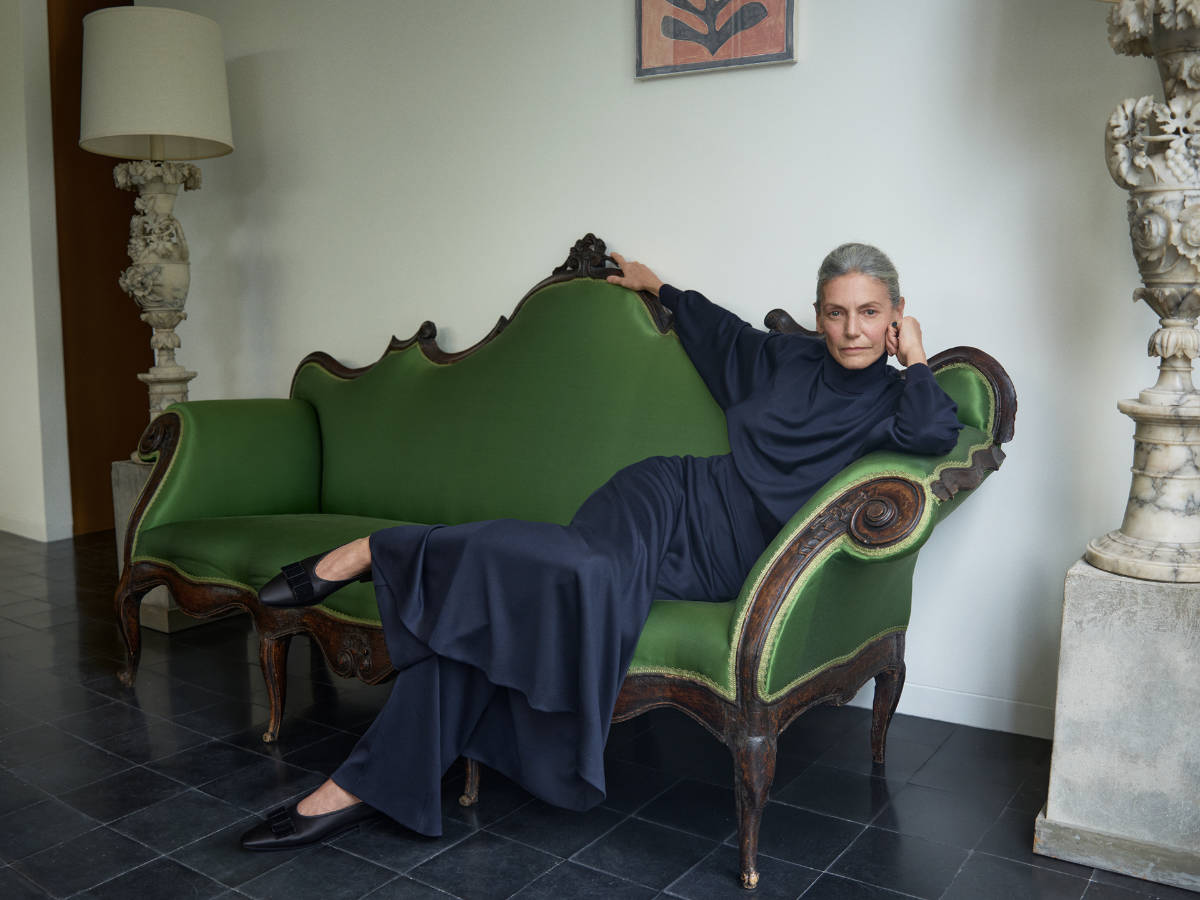
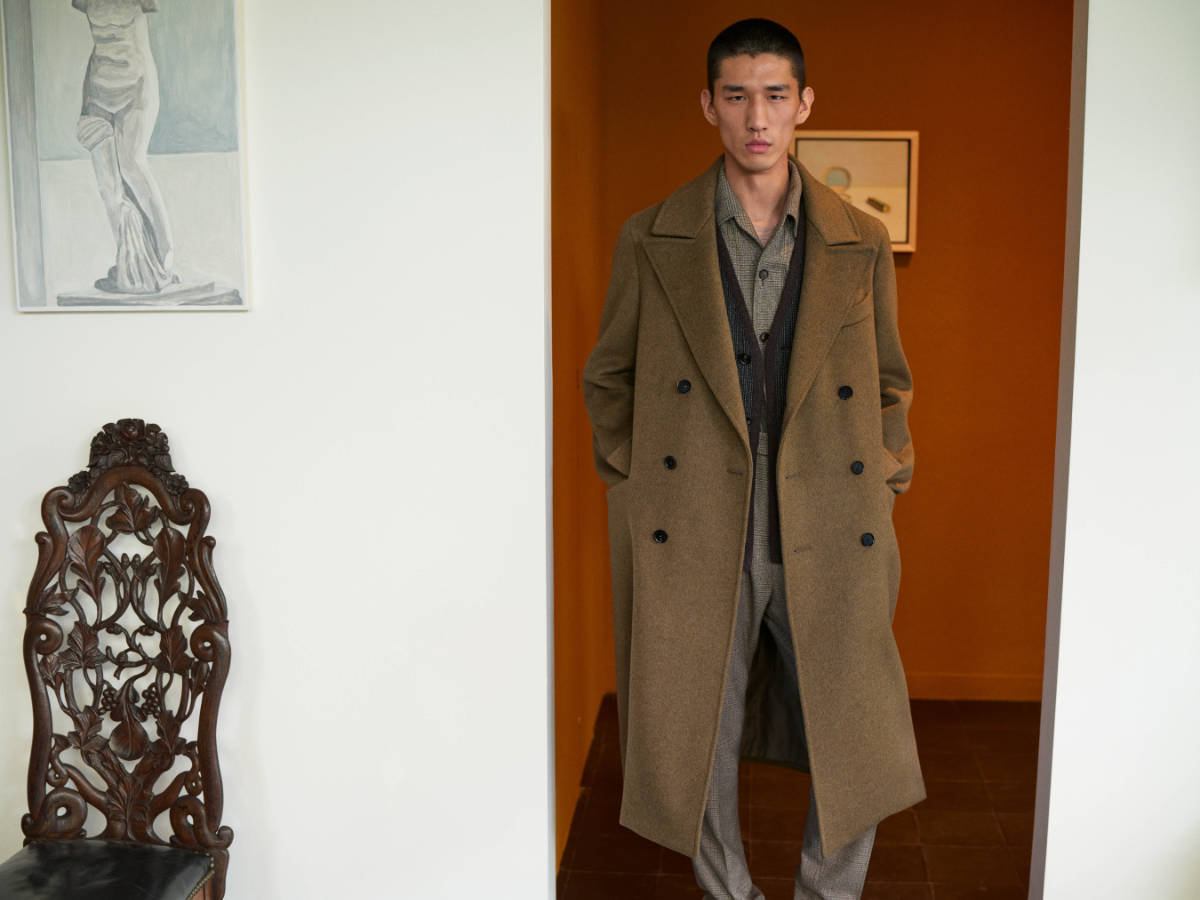
The story begins at the former residence of the de Menil family, a historic home whose interiors were designed by legendary couturier Charles James.
It was here that the Menil Foundation was established in 1954, laying the foundations for an idea that would eventually lead to the creation of a public museum. From the very beginning, the house was conceived as a place where people lived with art, rather than simply a space in which art was displayed.
That philosophy was later carried over to the Menil Collection, whose main building was designed by Renzo Piano. Opened in 1987, the institution was deliberately integrated into a residential Houston neighborhood, surrounded by greenery, houses and streets, allowing art to become part of everyday life.
This is precisely why the location feels almost perfectly suited to the Loro Piana aesthetic. Coats, shirts, trousers and bags are not positioned against the architecture like exhibits – they feel like natural elements of the life unfolding within it.
Loro Piana in the Silence of the Rothko Chapel
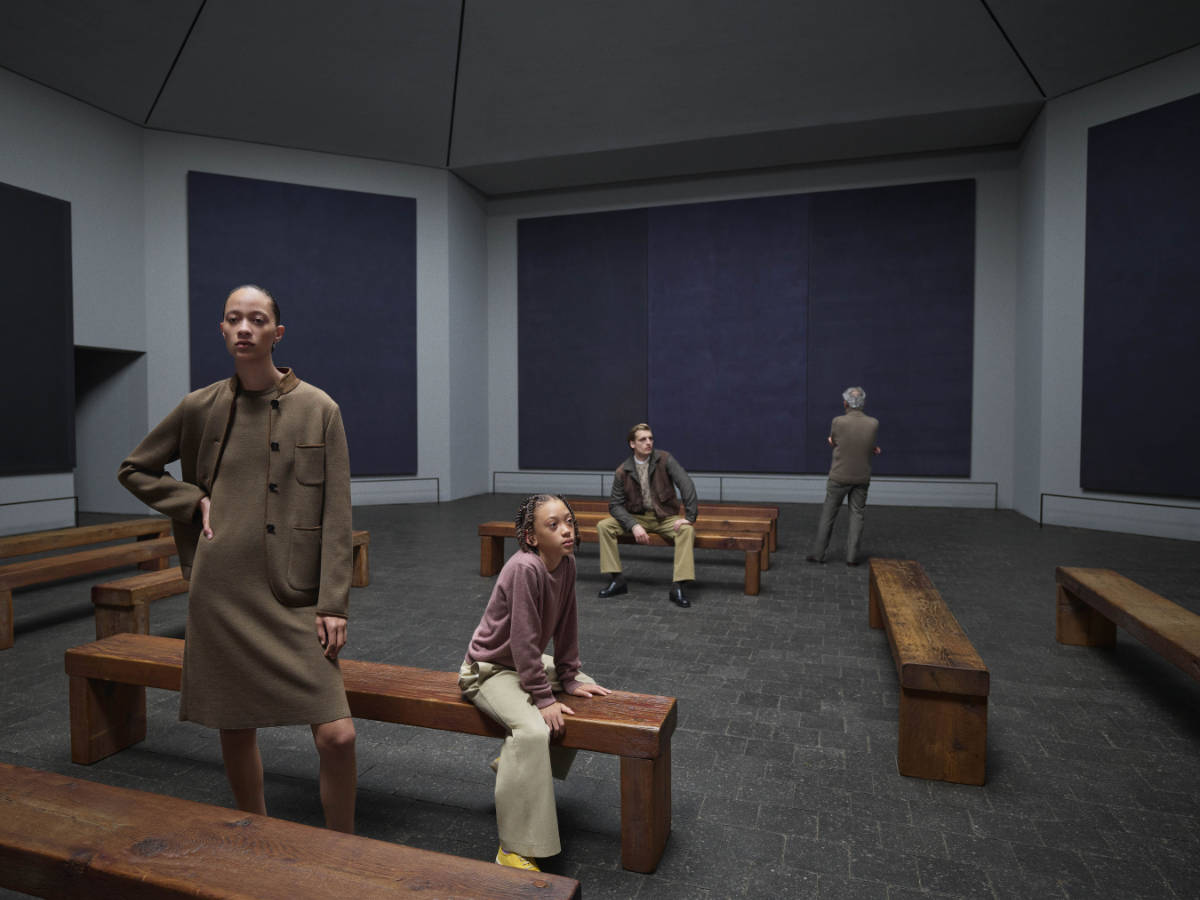
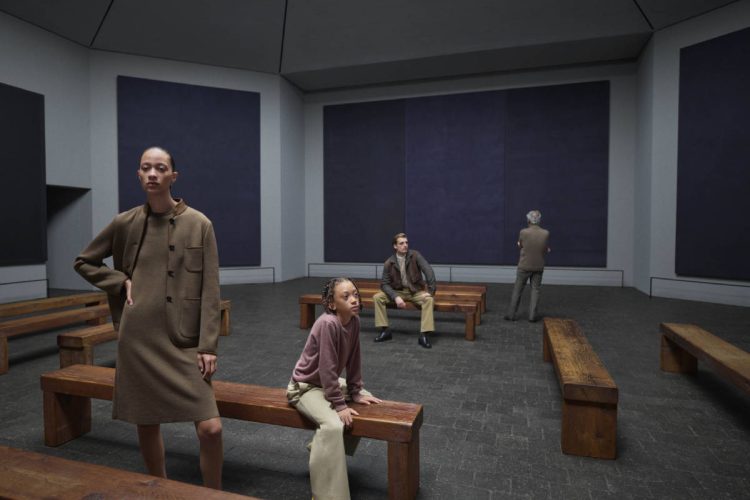
The campaign then moves to one of Houston’s most significant cultural landmarks – the Rothko Chapel.
Opened in 1971, this non-denominational chapel houses 14 monumental works by Mark Rothko. Natural light, the colors of his paintings and the almost meditative silence continuously transform the way visitors experience the space.
For Loro Piana, it is difficult to imagine a more fitting setting.
Here, luxury does not come from ornamentation, but from texture, proportion and material. Cashmere, silk and precisely constructed silhouettes take center stage, while shades of green, brick, stone, deep brown and chalk white echo the tones of Houston’s architecture and landscape.
A Wardrobe That Looks as Though It Is Actually Being Worn
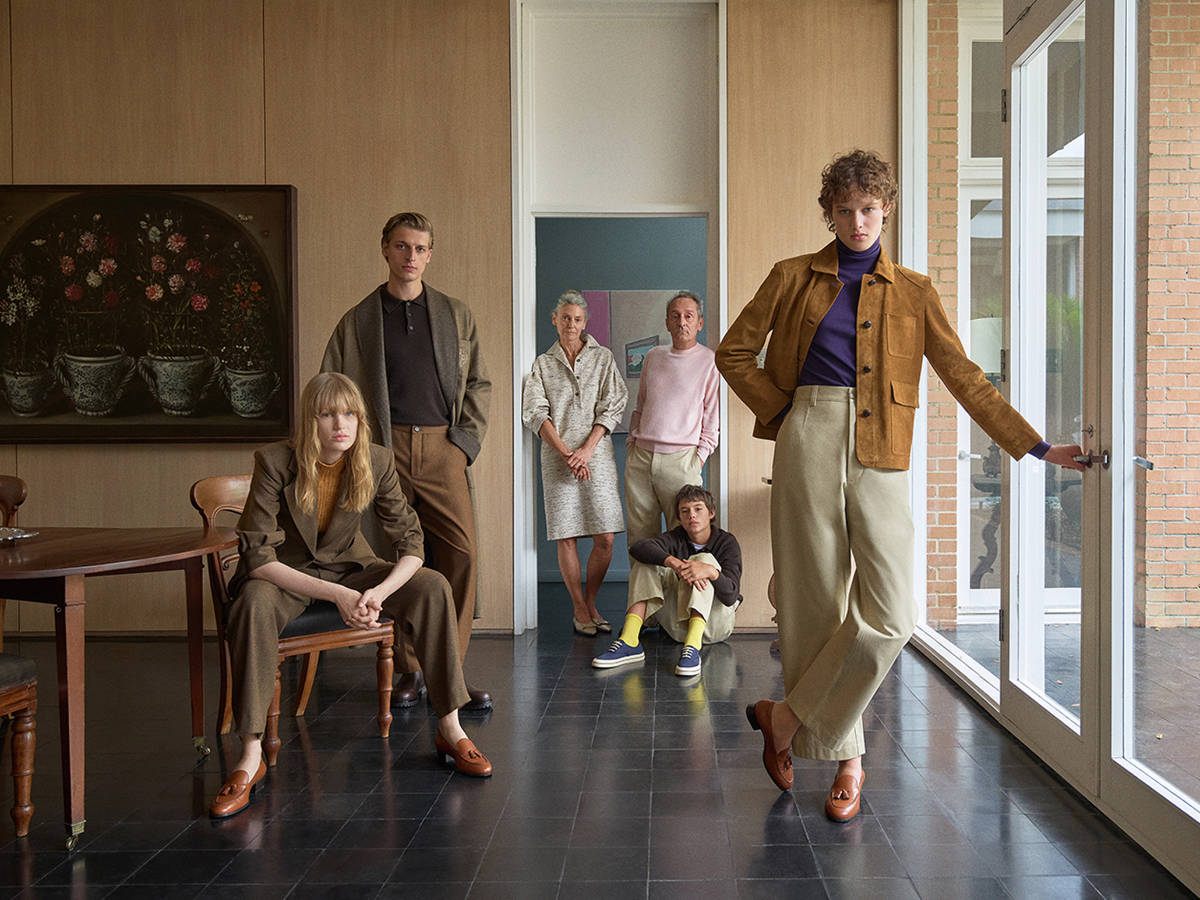
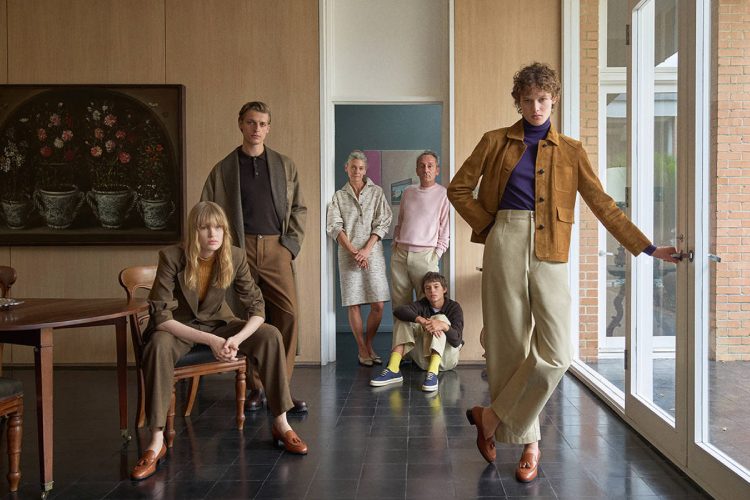
The intergenerational cast gives the campaign an especially distinctive character.
Appearing in front of the camera are Sigrid de Lespinay and her husband, artist Jean-Charles Blais, alongside Colin Otto, Jackie Hooper, Jackson Giles, Long Li, Noor Khan, Robert Forrest and Selena Forrest.
Their presence prevents the photographs from feeling like a rigidly staged fashion editorial. People walk, pause, interact and touch the objects around them, while the clothes respond naturally to their movements.
Sorrenti presents luxury through these small gestures.
Silk catches the light, cashmere creates softness and volume, while technical details add functionality to the wardrobe without disrupting its minimalist visual language.
It may also be the most precise expression of the Loro Piana philosophy: luxury that does not need to explain just how luxurious it is.
Three Pieces That Define Houston’s Palette
Among the standout pieces from the collection is the Jorie Shirt, a silk shirt presented in the Bordeaux/Straw color combination and priced at €2,300.
The Kolby Trousers, crafted from cashmere with Rain System® technology in the Dark Taiga Natte shade, are priced at €3,200, while the Extra Softy Bag L29 in silk, presented in a combination of Copper Grove, Dark Chocolate Licorice and Gold Fish shades, reaches €3,900.
All three pieces perfectly illustrate the central idea behind the new campaign: color, texture and exceptional materials tell the story without any need for visual excess.
A Campaign That Leaves Something Behind
This time, Loro Piana has gone beyond simply using cultural institutions as compelling campaign locations.
The fashion house is supporting the Menil Collection ahead of the institution’s 40th anniversary in 2027, including support for a gala scheduled for December of that year.
At the same time, Loro Piana is contributing to the Rothko Chapel’s Opening Spaces project, dedicated to preserving the 55-year-old building and expanding its north campus.
This gives the campaign’s cultural connection a significance that extends far beyond aesthetics.
Is This the Next Phase of the “Quiet Luxury” Trend?
Over the past few years, the term “quiet luxury” has become almost impossible to avoid, but with this campaign, Loro Piana demonstrates how the concept can evolve.
Simply removing logos and offering expensive materials is no longer enough. The new expression of quiet luxury is increasingly connected to culture, art, architecture, craftsmanship and authentic experiences.
That is precisely why Houston is anything but a random choice.
The new campaign continues a series of Loro Piana projects photographed in architecturally and culturally significant locations, including Cini Boeri’s Casa Rotonda, Oscar Niemeyer’s Casa das Canoas, Villa Santo Sospir associated with Jean Cocteau, Balthus’ Grand Chalet, La Colombe d’Or and Fondation Maeght.
Houston now joins that list.
Loro Piana Fall/Winter 2026–2027 ultimately becomes a story about luxury that is not measured by the amount of attention it attracts. It exists in the touch of cashmere, in the way silk catches the light, in the silence of the Rothko Chapel and in the architecture through which people simply continue with their day.
And perhaps that is where the new definition of luxury lies – not in the need to be noticed, but in the privilege of being able to remain quiet.