
More photos
When most people think of Prada, they picture Milan runways, iconic handbags, and luxury fashion.
Today, however, the Italian Maison is pursuing a far more ambitious mission: helping astronauts safely explore the Moon.
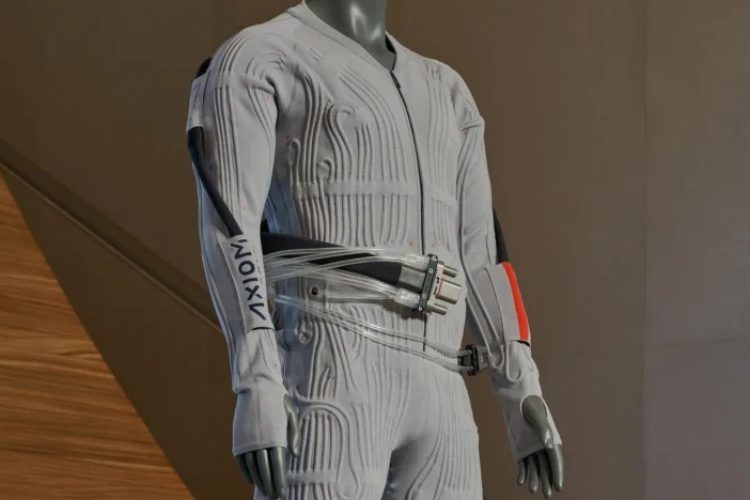
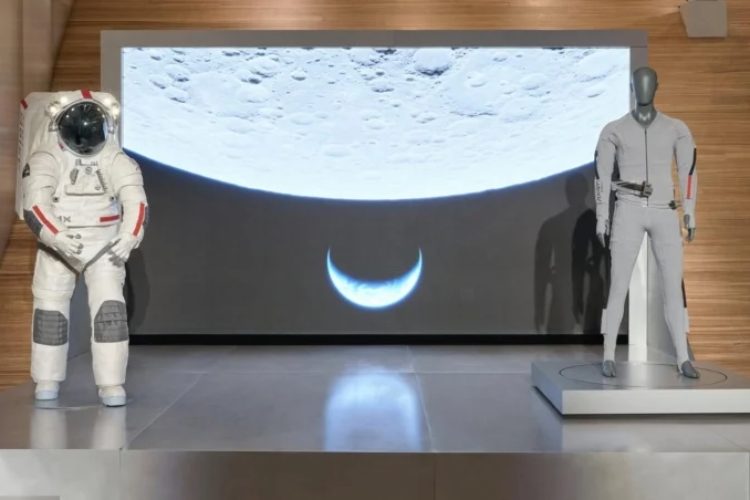
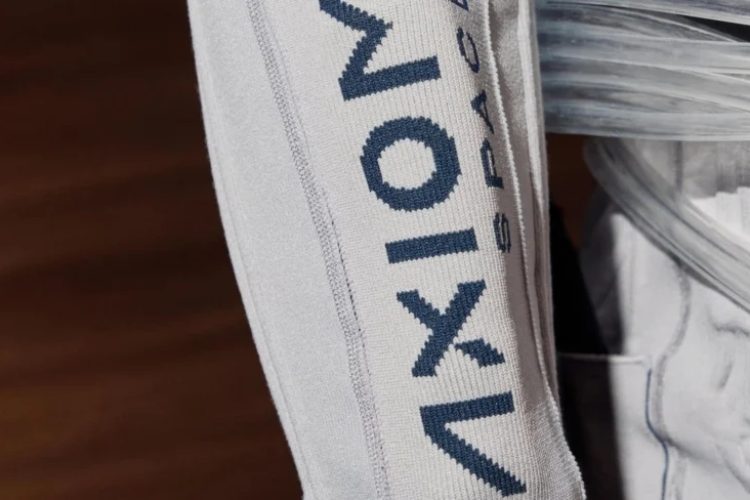
Together with Axiom Space, Prada has unveiled the next-generation Liquid Cooling and Ventilation Garment (LCVG), the advanced undergarment that will be worn beneath the AxEMU spacesuit during future lunar missions. Far more than a piece of technical clothing, the system is one of the mission's most critical life-support components, enabling NASA astronauts to undertake extended surface operations during the Artemis program—the first human return to the Moon in more than half a century.
At first glance, the collaboration may seem unexpected. Yet Prada brings more than a century of expertise in advanced textiles, garment engineering, ergonomics, and precision tailoring. Founded in 1913, the luxury house has spent decades refining how clothing interacts with the human body—knowledge that has proven invaluable in developing a spacesuit designed to perform under some of the harshest conditions imaginable.
The new LCVG has been engineered using sophisticated 3D body modeling to maximize comfort during lunar excursions lasting up to eight hours. Its primary role is regulating astronauts' body temperature while they work in an environment where temperatures fluctuate dramatically between sunlight and shadow.
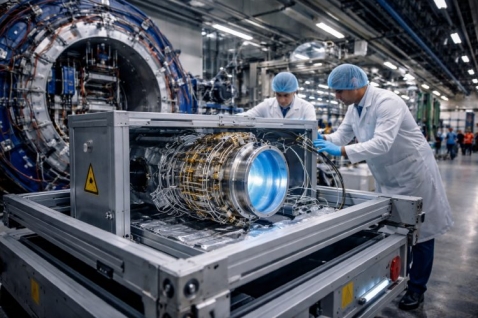
The garment incorporates an intricate network of narrow tubes through which chilled water continuously circulates. Positioned across the body's major muscle groups, the tubing absorbs excess heat and transfers it to the spacesuit's life-support backpack, where it is ultimately dissipated into the vacuum of space. To enhance reliability, the cooling system features full redundancy, ensuring that a secondary circuit can immediately take over should the primary system fail.
Cooling is only part of the garment's function. The LCVG also plays a vital role in astronaut ventilation, continuously delivering oxygen to the helmet while removing carbon dioxide produced during respiration. This constant air circulation allows astronauts to work safely and comfortably throughout lengthy lunar operations.
Prada's involvement with Axiom Space began in 2024, when the fashion house contributed to the development of the outer layer of the AxEMU spacesuit. That protective shell was engineered to withstand the extreme temperatures, abrasive lunar dust, and micrometeoroid impacts expected near the Moon's south pole, where upcoming Artemis missions are planned to operate.
The latest phase of the partnership represents a significant evolution. Prada is no longer contributing solely to the suit's external architecture—it is now helping develop the layer worn directly against the astronaut's body. This means the Italian luxury brand is actively participating in technologies that are fundamental to human survival beyond Earth.
While fashion has ventured into space before, this collaboration is fundamentally different. Many will remember Blue Origin's 2025 mission, during which Lauren Sánchez and her all-female crew wore custom Monse flight suits designed with a fashionable silhouette. That suborbital flight lasted only a few minutes and was largely symbolic.
Prada's work with Axiom Space, by contrast, is rooted in engineering rather than aesthetics. Every material, seam, and ergonomic solution has been developed to support astronauts operating for hours on the surface of another celestial body, where performance and reliability are matters of survival rather than style.
There is, however, one unmistakable nod to Prada's design heritage. A subtle red stripe running along one sleeve recalls the brand's iconic Linea Rossa collection, offering a discreet signature that connects one of the world's most advanced spacesuit systems with one of Italy's most celebrated fashion houses.
As preparations continue for NASA's Artemis missions, Prada has secured an unexpected place in the future of space exploration. If all proceeds according to plan, the next astronauts to walk on the Moon will not only wear some of the most advanced technology ever created—they will also carry with them a piece of Italian design heritage.
The future of luxury, it seems, is no longer confined to flagship boutiques, private jets, or superyachts. Its next destination lies 384,400 kilometers from Earth.