The wealthiest travelers are increasingly trading Saint-Tropez, Courchevel and traditional five-star hotels for places that can only be reached by helicopter, snowmobile or after hours of traveling through the wilderness.
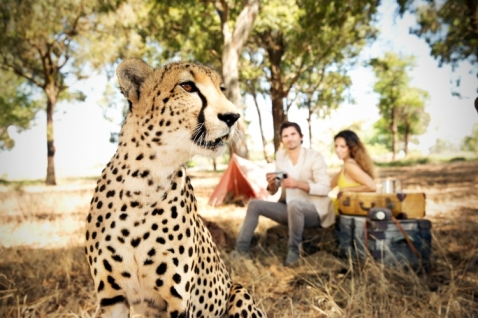
From the Swedish Arctic and secret locations in Lapland to Iceland, Bhutan, Botswana and New Zealand, the new definition of luxury has far less to do with displaying wealth. Privacy, silence, untouched nature and the feeling of having reached somewhere almost no one else can access are becoming some of the most desirable privileges in contemporary travel.
Forget hotel lobbies filled with designer marble and rows of supercars parked outside the entrance. For some of today’s wealthiest travelers, the idea of having reindeer, moose and a handful of people crazy enough to take a helicopter in search of untouched snow as their nearest neighbors is far more appealing.
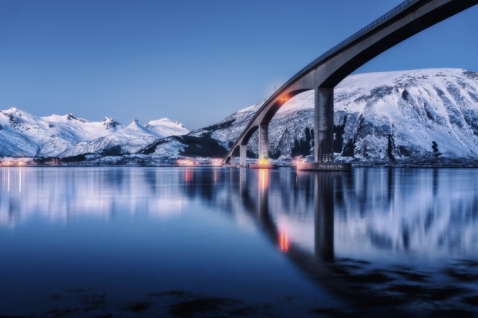
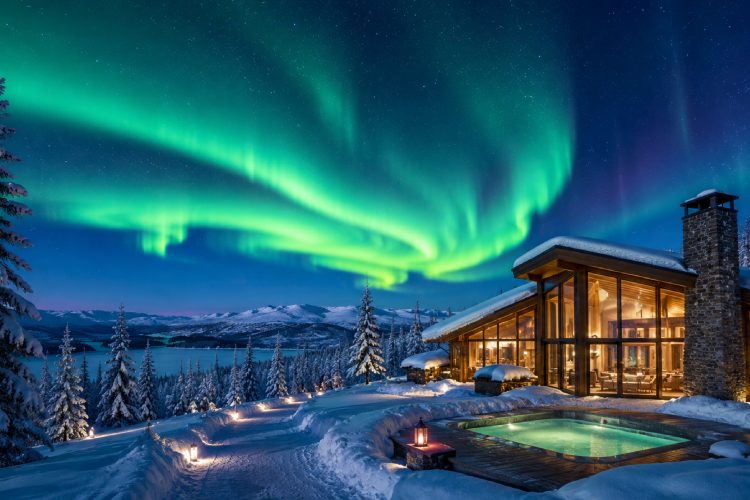
One of the best examples is Riksgränsen, Sweden’s northernmost ski resort, with a population of only around sixty people. It lies roughly 200 kilometers above the Arctic Circle, in a region where the sun barely sets during summer, while winters bring extreme temperatures, enormous amounts of snow and the Northern Lights.
It can be reached from Stockholm by sleeper train – a journey of around 17 hours.
And yet this is exactly where people from the worlds of finance, technology billionaires and major corporate executives are now arriving, ready to explore approximately 5,180 square kilometers of untouched terrain and use helicopters instead of ski lifts.
A $730-a-Night Hotel – or $11,000 if You Want the Entire Place to Yourself
There are no extravagant hotels in Riksgränsen like those found in St. Moritz or Courchevel.
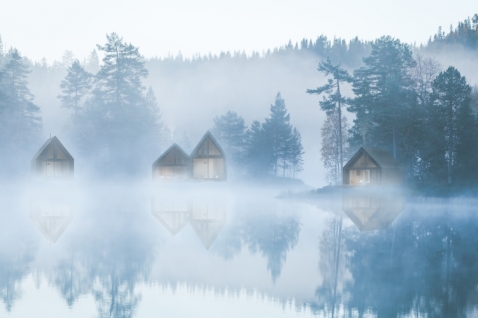
Instead, travelers in the know choose Niehku Mountain Villa, a small property with just 14 double rooms.
A night costs around $730, including breakfast, while activities are not included in the rate. But among wealthy guests, another option is far more popular – renting the entire property for approximately $11,000 per night.
Behind its relatively understated exterior are an authentic Swedish sauna with a sauna master, Hästens beds and an impressive wine cellar holding around 3,000 bottles, including cases of Romanée-Conti.
In other words, the wilderness may be authentic. The comfort is anything but Spartan.
After the Pandemic, Luxury Changed Its Address
What is happening in northern Sweden is part of a much larger phenomenon.
The wealthiest travelers are increasingly looking for experiences that are more intimate, authentic and closely connected to the destination itself. A luxury lodge is no longer simply somewhere to sleep between activities – it is becoming the reason for the journey.
The trend accelerated particularly after the pandemic. According to data cited by Deutsche Bank Wealth Investment, investors are increasingly directing capital toward experience-rich properties, including independent luxury lodge developments. Since 2023, hundreds of new luxury nature retreats and safari camps have opened around the world.
A similar shift can also be seen in real estate. Demand from international buyers for second homes and chalet residences in the Swiss Alps has pushed prices higher, while Verbier and Gstaad have become some of the most expensive resort destinations in the country.
But the key change is not simply financial.
The new luxury increasingly means less “look how much this costs” and more “look how difficult it is to get here.”
From Glamping to Palaces in the Wilderness
Glamping once opened the door to the idea that luxury could move far beyond major cities and famous tourist centers.
But today’s version of that concept has gone much further.
A modern wilderness lodge can offer butler service, restaurant-level cuisine, a private chef, wellness programs and spa treatments, while completely untouched nature begins just beyond the front door.
At Niehku Mountain Villa, the day can begin with freeride skiing, hiking or swimming in a fjord with one of the region’s leading local guides, Robert Gustafsson, and end with a dinner prepared by top Nordic chefs, an award-winning pastry chef and one of Sweden’s finest sommeliers.
It is an interesting contradiction of the new luxury: guests want to feel as though they have escaped civilization, but not necessarily everything good civilization has invented.
A Secret Location in Lapland for Just 17 Guests
If Riksgränsen sounds isolated, Finland goes even further.
More than ten luxury lodge properties have opened since the pandemic between Finland’s Lakeland region and Lapland. In the past year alone, Balder Lodge, Aino Private Island Hotel and Skyra Retreat have appeared, while one of the most exclusive new arrivals is Octola II Ultra Lodge, which opened in December 2025.
Its exact location has not been made public.
Neither has its price.
What is known is that it accommodates just 17 guests and offers more than 800 square meters of space, five en-suite bedrooms, a private spa with three saunas, a fully equipped gym, a cigar lounge and a dedicated area designed for watching the Northern Lights.
Guests also have access to a guide for exploring more than 800 hectares of Lapland, while arrival can involve a helicopter, snowmobile or even dog sled.
Octola founder Janne Honkanen reduces the philosophy of the project to just a few ideas: privacy, silence, space and an authentic connection with nature.
It is luxury without excess – but with a level of exclusivity that is almost impossible to replicate.
Privacy Is Becoming the Most Expensive Hotel Amenity
In a hyper-connected world, the ability to become unreachable is becoming a privilege.
For ultra-wealthy travelers, privacy is no longer a pleasant extra but one of the basic criteria when choosing a destination.
Jason Squatriglia, founder of Your Favorite Travel Agent, explains it very simply: contemporary travelers are once again realizing that time is their most valuable asset, while privacy is non-negotiable.
That is why the map of luxury tourism is expanding so rapidly.
In New Zealand there is Flockhill, in Botswana Baines' Lodge, in Scotland Wildland and in Bhutan Amankora. Eleven Experiences, which began with the Scarp Ridge project in Colorado in 2011, now operates more than ten luxury lodge properties.
Among them is Eleven Deplar Farm in northern Iceland, a former sheep farm transformed into a 13-room luxury retreat, where Justin Bieber withdrew in 2025 to record new music.
Discretion Is In, Flaunting Wealth Is Out
Major hotel companies are very aware of what is happening.
Brands such as Four Seasons, Aman and One&Only are moving more aggressively into the world of private homes, villas and residences, attempting to retain guests who no longer want a traditional hotel experience.
The reason may be the clearest sign of just how much the idea of luxury has changed.
As Squatriglia observes, discretion has become desirable, while openly displaying wealth is falling out of fashion. Instead of another holiday in the south of France or St. Barts, wealthy travelers are choosing remote destinations capable of offering maximum privacy without sacrificing security, service or comfort.
That does not mean St. Moritz, the Maldives or the French Riviera will suddenly be empty.
But the most exclusive journey is no longer necessarily the one whose location everyone instantly recognizes on Instagram.
Perhaps it is exactly the opposite.
When you can stay virtually anywhere, the greatest luxury becomes a place most people have never heard of – remote enough for the phone to finally stop ringing, wild enough for nature to still dictate the rules, and exclusive enough for that wilderness to conceal a private chef, a sauna and a wine cellar with 3,000 bottles.