Electrogenic
How do you modernize a Rolls-Royce that is more than half a century old without stripping away its character, dignity and historical value?
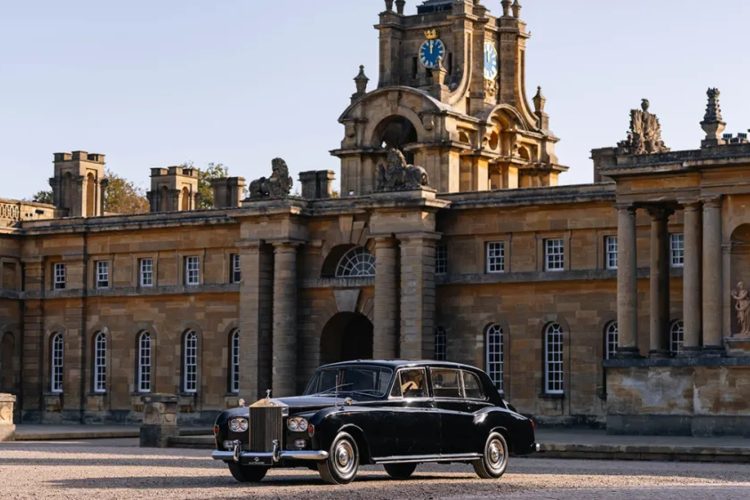
London has found a rather elegant answer. An official 1973 Phantom VI has been given a fully electric powertrain, but the entire conversion has been carried out in such a way that the car could one day be returned to its original condition.
The Lord Mayor of the City of London, Susan Langley, decided to bring one of the most recognizable cars in the official ceremonial fleet into the electric era.
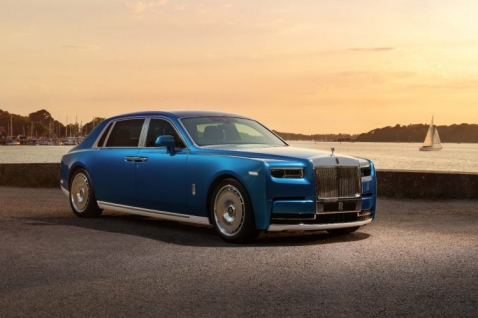
The vehicle in question is a 1973 Rolls-Royce Phantom VI, one of just 374 examples ever produced, which has exchanged its original powertrain for a 120 kW electric motor and a 62 kWh battery.
The project forms part of the wider strategy of the City of London Corporation, which aims to bring its own operations to net-zero carbon emissions by 2027.
The Rolls-Royce Is Electric, but Nothing Was Cut, Drilled or Welded
British company Electrogenic, which specializes in converting classic cars to electric power, was commissioned to carry out the transformation.
The most interesting aspect of the project is not simply the fact that the Phantom VI no longer has a conventional engine, but the way the transformation was executed.
Nothing on the original car was cut, drilled or welded to accommodate the new technology. The entire conversion is reversible, meaning the Phantom could theoretically be returned to its original factory specification.
That is particularly important for a car that is not merely a means of transportation, but a piece of British automotive and ceremonial history.
A 120 kW Electric Motor and Up to 193 Kilometers of Range
The original powertrain has been replaced by a 120 kW electric motor, equivalent to approximately 163 hp, producing around 300 Nm of torque.
Energy comes from a 62 kWh battery positioned beneath the enormous front hood, while power is delivered through a single-speed direct-drive transmission.
The range is between 100 and 120 miles, or approximately 161 to 193 kilometers.
That may not sound spectacular compared with contemporary luxury electric cars, but the Phantom VI is not expected to travel from London to the French Riviera. Its duties primarily involve urban ceremonial journeys and official events, for which the available range is more than sufficient.
Fast charging is also supported, allowing the battery to be topped up between engagements.
And there is room for future improvement. Given that the limousine is almost six meters long, Electrogenic says the battery capacity could potentially even be doubled one day.
It Even Has a “Ceremonial” Driving Mode
Perhaps the most charming detail of the entire conversion is the inclusion of two specially calibrated driving modes.
In Normal mode, the Phantom behaves like a modern electric car and offers one-pedal driving, which is particularly practical in congested city traffic.
But then there is Ceremonial mode.
When activated, the system deliberately limits power and torque so that the enormous Rolls-Royce can move slowly, smoothly and with appropriate dignity during ceremonial processions and state occasions.
In other words, the electric Phantom may technically be capable of being more energetic, but it knows when protocol calls for a little dignity.
Even the modern display containing all the information about the electric powertrain has been hidden inside the glove compartment, ensuring that digital technology does not disturb the historic appearance of the cabin.
Electric Power Actually Suits the Character of an Old Rolls-Royce
There is a certain irony in the fact that electrification feels remarkably natural for a car such as the Phantom VI.
When the model was introduced in the late 1960s, one of its defining qualities was its exceptionally quiet, smooth and unobtrusive ride.
Electrogenic Director Steve Drummond believes electrification has only emphasized those characteristics further. The Phantom is now almost silent, easy to drive, delivers instantly available power and produces no tailpipe emissions.
So while the car has lost its original engine, in a certain sense it has become even more of a Rolls-Royce.
Why Didn’t They Simply Buy New Cars?
The City of London Corporation spent approximately five years considering what to do with its ceremonial fleet of three Rolls-Royce cars.
One option was to sell the historic vehicles and purchase new ones. Another involved carrying out expensive repairs and continuing to use the existing cars.
Ultimately, the decision was made that retaining the historic fleet while modernizing it represented a more sustainable and financially rational solution.
Susan Langley, the third woman to hold the role, described the project as an example of innovation that respects heritage while finding a way to keep it relevant for the future.
And that may be the strongest argument in favor of a project like this.
Instead of allowing a 53-year-old car to end up in a museum or private collection, London has found a way to continue using it for precisely the purpose for which it was built – transporting city officials with dignity.
Only now, it will do so almost completely silently.
The electric 1973 Rolls-Royce Phantom VI will be presented to the public at Salon Privé at Blenheim Palace, taking place from September 2 to 6, 2026.