

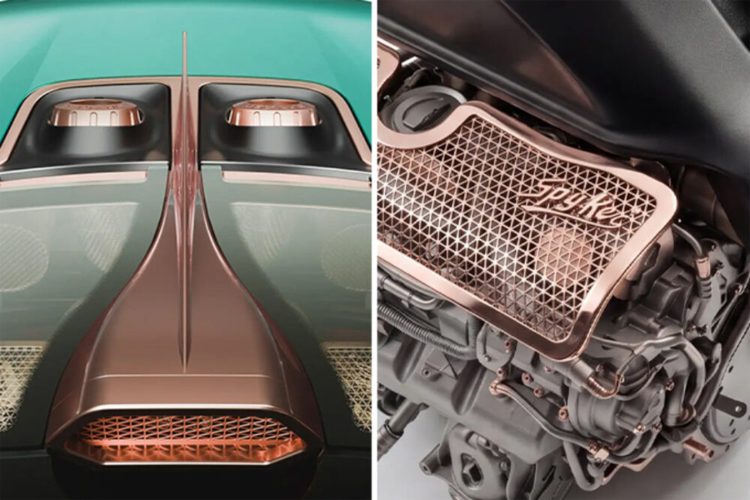

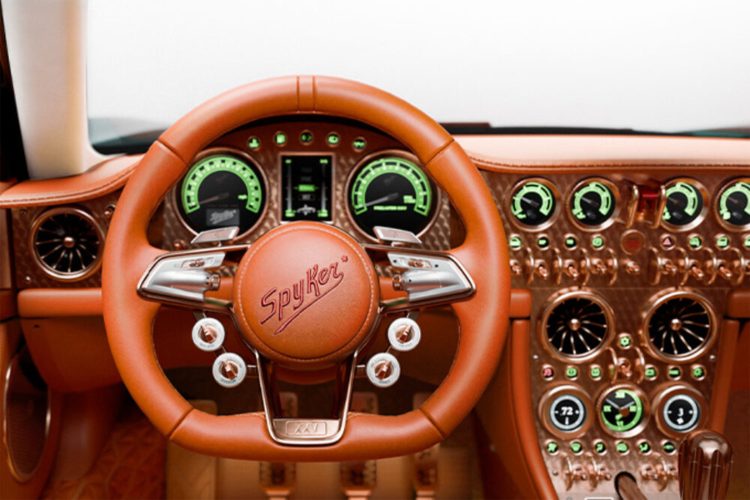

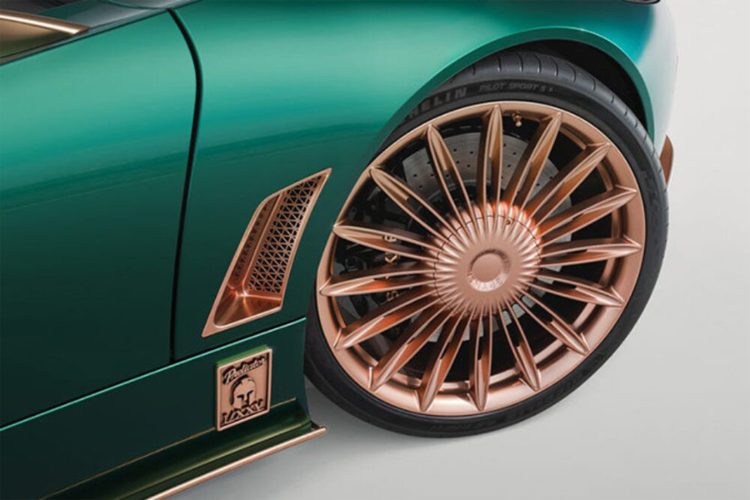



More photos
At a time when hypercars are becoming electrified, automated and increasingly dominated by digital technology, Spyker has decided to do almost the exact opposite.
The Dutch marque is returning to the automotive scene with the C8 Preliator XXV – a brutal 800 HP hypercar with a six-speed manual transmission, rear-wheel drive and a hand-formed aluminum body. Only 25 examples will be built.
Spyker’s history could hardly be described as uneventful. The Dutch manufacturer of exotic sports cars has effectively disappeared from the scene twice already, but founder Victor Muller clearly has not had the final word yet.
Its latest comeback was marked during Monterey Car Week, where the Spyker C8 Preliator XXV Coupé was unveiled at The Quail.
Its name is rather fitting. Preliator means “warrior” in Latin, and beneath the dramatic design are performance figures that certainly live up to the name.
800 HP, Rear-Wheel Drive and – a Manual Gearbox
At the heart of the new model is a 4.0-liter twin-turbo V8 engine sourced from Audi, producing 800 HP and an impressive 1,000 Nm of torque.
All of that power is sent exclusively to the rear wheels.
But the most interesting detail is not the engine. It is what sits between the engine and the driver: a six-speed manual transmission.
There are no paddle shifters behind the steering wheel, no automatic gear changes and no electronics constantly choosing the perfect moment to shift. Instead, there is a traditional gear lever with the distinctive exposed mechanical linkage that has been one of the most recognizable details of Spyker cars for years.
Get a shift wrong and the car will not hide it for you.
Spyker says the C8 Preliator XXV can exceed 217 mph, or approximately 349 km/h.
Around 2,100 Hours of Work Go Into Each Car
Even more unusual is the decision to build the body from aluminum in an era obsessed with carbon fiber.
And not just any aluminum body.
Each panel is hand-formed by British company Coventry Prototype Panels, while Spyker produces the aluminum spaceframe chassis itself. Building a single car reportedly requires approximately 2,100 hours of labor.
With a dry weight of 1,525 kilograms and carbon-ceramic brakes, the Preliator XXV nevertheless combines traditional craftsmanship with serious modern technology.
Buyers will not simply choose between a handful of predefined specifications, either. Each of the 25 planned examples will be individually configured, further emphasizing the almost artisanal character of the car.
A Hypercar Inspired by Aviation
The connection between Spyker and aviation is nothing new, and the Preliator XXV showcases it at virtually every turn.
A large aerodynamic fin extends from the roof toward the rear of the car, paying tribute to the 1919 Spyker C1 Aerocoque and to the period when the company was involved in aircraft production.
At the rear, exhaust outlets emerge directly through the engine cover, while the taillights are shaped to resemble jet engines with afterburners.
And then the doors open.
Spyker has equipped the car with what it calls “Butterfly Mode,” which raises both the doors and the entire rear clamshell at the touch of a button, turning an already extravagant hypercar into a small mechanical spectacle.
The Cockpit Looks More Like a Luxury Aircraft
The aviation inspiration continues inside the cabin.
There are machined aluminum surfaces, illuminated analog instruments, switches reminiscent of an aircraft cockpit and an integrated head-up display.
A distinctive isogrid geometric pattern inspired by aerospace engineering appears on the air vents, grilles, pedals and even the seat stitching.
Most importantly, Spyker has made no attempt to hide the mechanical components. Quite the opposite: the exposed manual transmission linkage is displayed almost like a sculpture at the center of the cabin.
In an automotive world increasingly determined to move as many functions as possible onto screens, that approach now feels almost rebellious.
The Price? Around €1.6 Million
An official price has not yet been confirmed, but the Spyker C8 Preliator XXV is expected to cost around €1.6 million.
Even that figure is unlikely to prove much of an obstacle. During Monterey week, the majority of the planned 25 examples were reportedly already reserved.
And it is not difficult to understand why.
The Preliator XXV will probably not be the fastest hypercar in the world, nor the most technologically advanced. But Spyker clearly is not trying to win that particular contest.
While the rest of the industry races toward electrification, hybrid systems, automatic transmissions and increasingly complex electronics, Spyker is offering 800 HP, rear-wheel drive, a metal manual gear lever and thousands of hours of human craftsmanship.
In 2026, that old-school approach may be precisely what makes it so exotic.