More photos
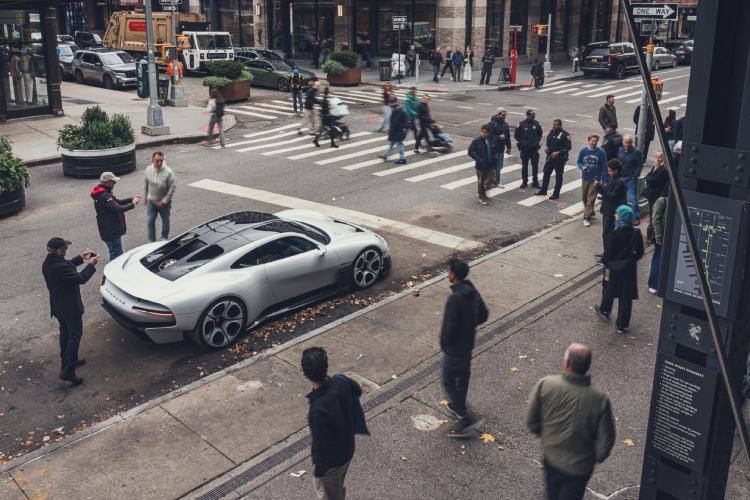
Porsche has unveiled the spectacular Mission S concept in New York, introducing a mid-engine supercar that previews an entirely new model family positioned above the legendary 911. Inspired by some of the most important racing and road cars in the German manufacturer's history, Mission S combines futuristic design with analog instruments, mechanical details, and driver-focused technology. Even more intriguingly, Porsche is reportedly not planning a fully electric version of this new supercar family, while unofficial estimates suggest a potential price of approximately €500,000.
Some cars represent the evolution of existing models, while others have the ambition to redefine an entire manufacturer's hierarchy. The Porsche Mission S belongs firmly in the second category.
The German company, whose identity has been inseparably linked to the 911 for decades, is now signaling the possibility of creating a new supercar positioned above its most recognizable sports model.
Unlike exclusive projects such as the 918 Spyder, which were produced in limited numbers, the future vehicle inspired by the Mission S concept is intended to become a permanent member of the Porsche lineup.
Although its final name, powertrain, price, and production date remain unknown, the concept offers a clear indication of the direction Porsche wants to pursue: a supercar combining extraordinary performance, a rich motorsport heritage, and the increasingly rare immediacy of a truly engaging driving experience.
A Symbolic Return to Where Porsche's American Story Began
The location chosen for the concept's unveiling was far from accidental.
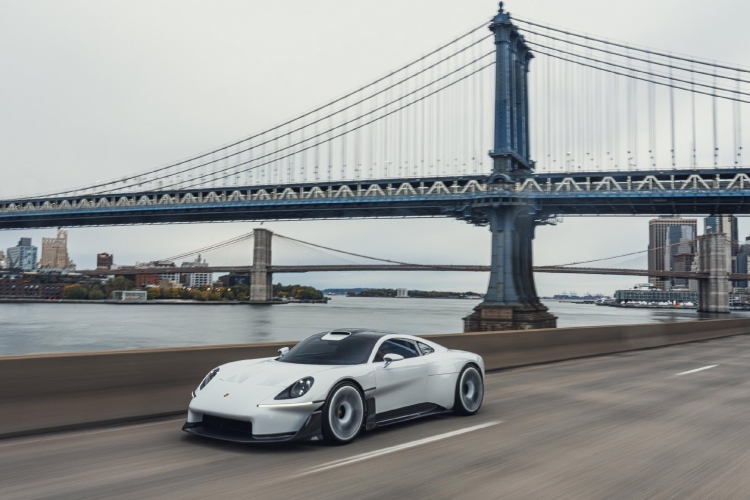
Porsche selected a waterfront location in Queens, New York, where the legendary Porsche 550 Spyder was photographed in 1953.
The 550 Spyder is widely regarded as one of Porsche's first true racing-oriented sports cars, and its success played a significant role in establishing the German manufacturer's reputation in the American market.
The location also recalls the important contribution of Max Hoffman, the American importer who worked with Ferry Porsche and helped increase the company's sales in the United States from just 32 vehicles in 1951 to 283 the following year.
More than seven decades later, Mission S brings Porsche back to the same location, symbolically connecting the beginnings of its American success with a new generation of high-performance sports cars.
The company also chose to bypass the Paris Motor Show, taking place during the same week, allowing its new concept to command the automotive world's undivided attention.
The decision reinforces the importance Porsche appears to place on this project, presenting Mission S not simply as another design study but as a potential milestone in the brand's future.
A Design Combining the 911, 959, Carrera GT, and Legendary 917
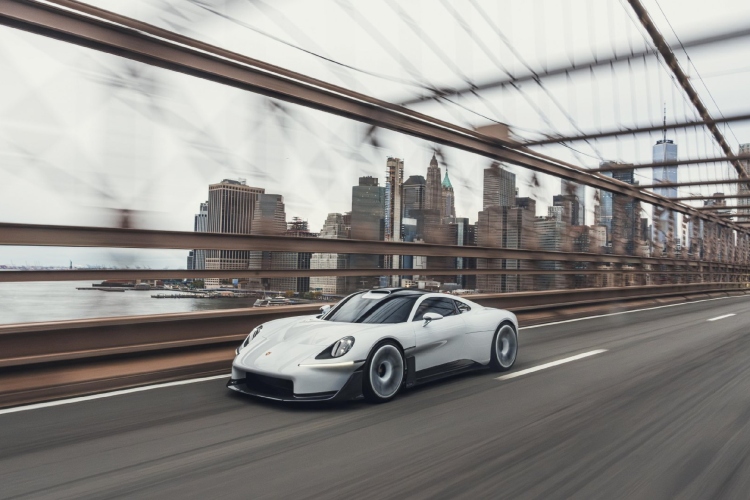
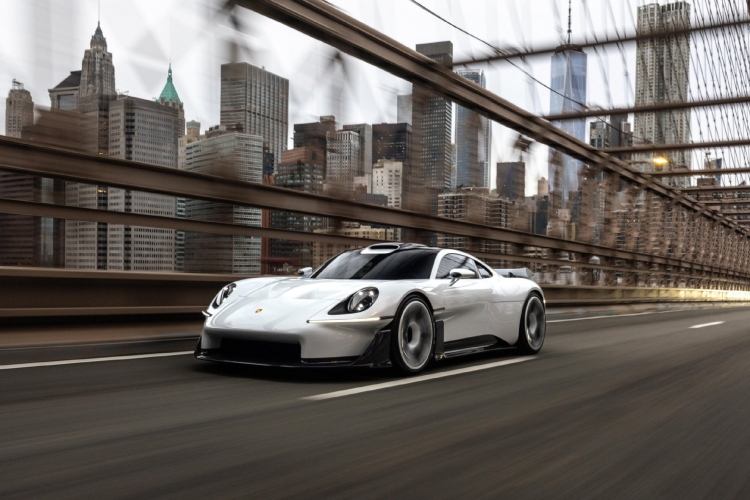
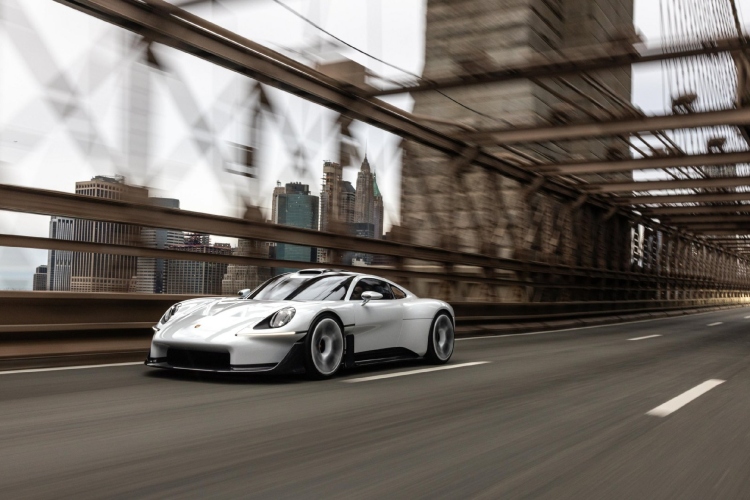
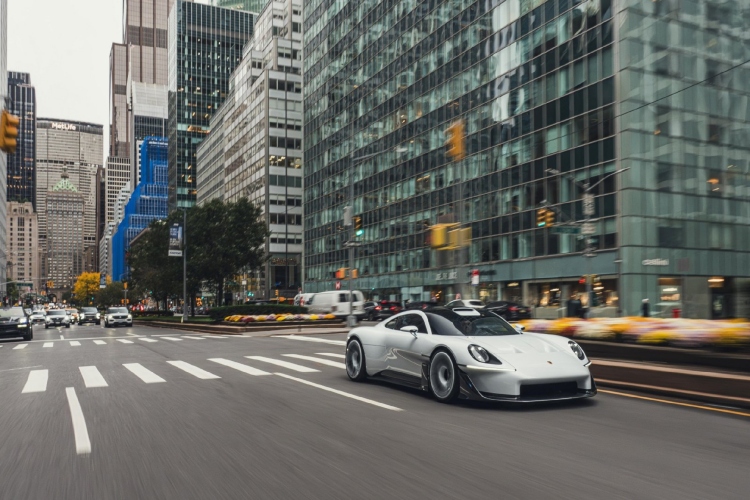
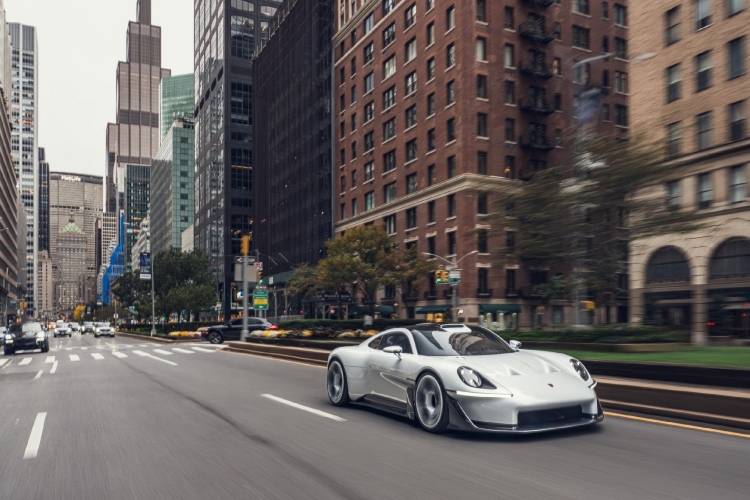
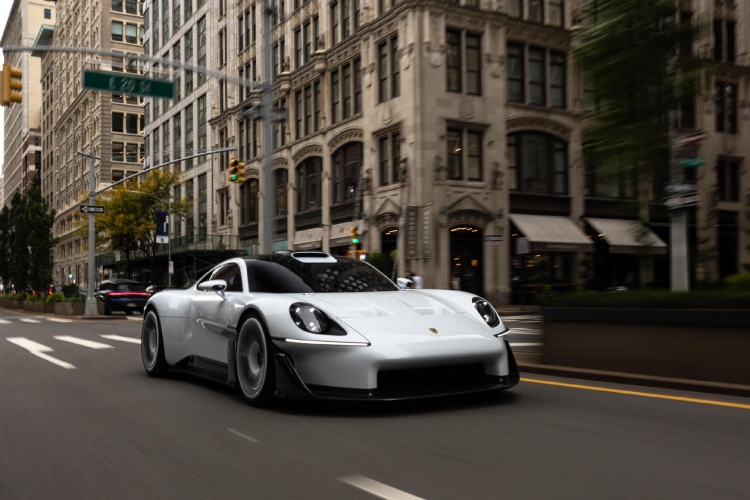
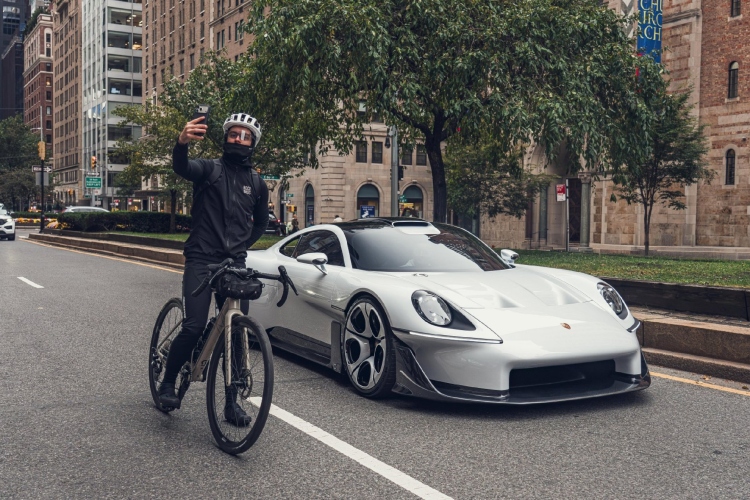
At first glance, Mission S unmistakably belongs to the Porsche family, yet its design is far more than a straightforward reinterpretation of a single historic model.
Instead, the designers have drawn inspiration from some of the most significant automobiles the company has produced over the past several decades.
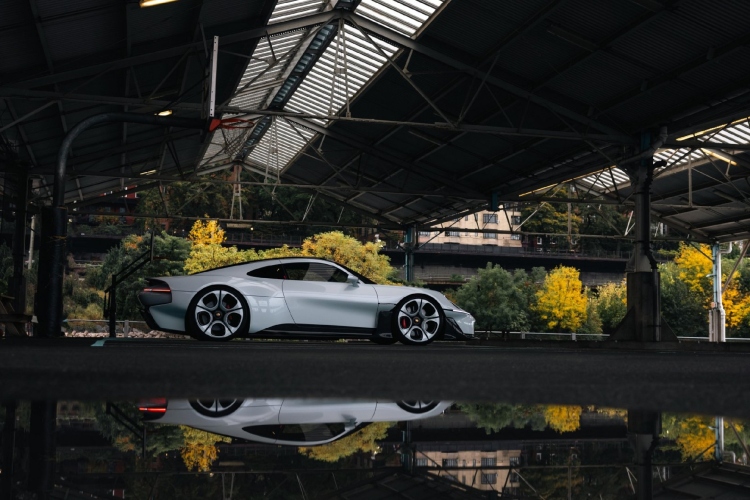
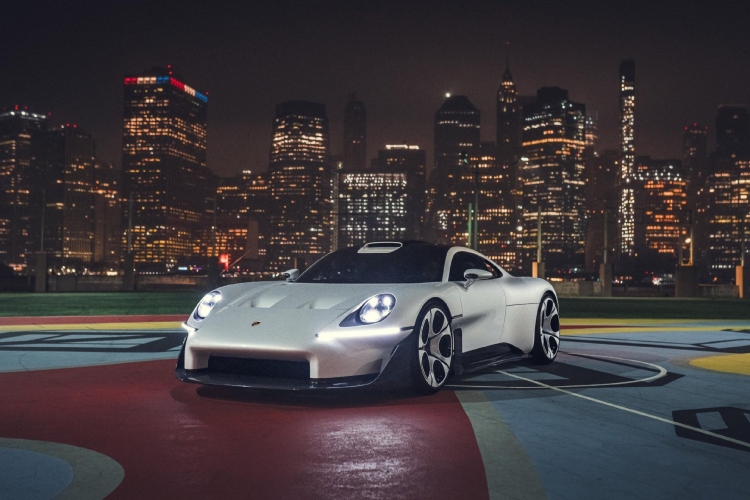
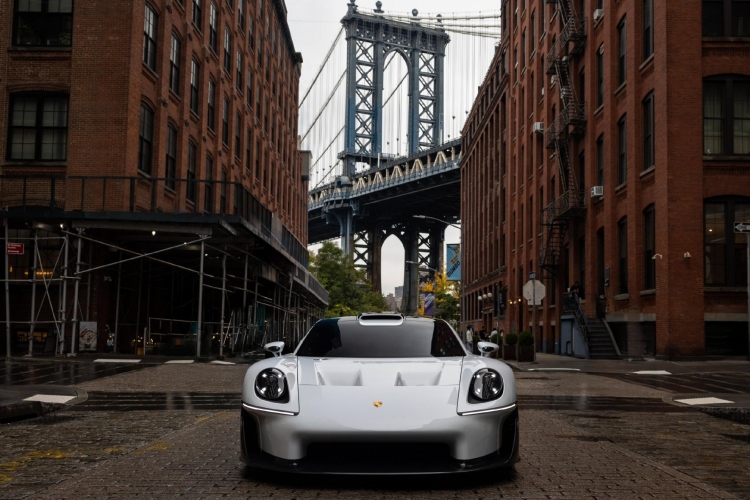
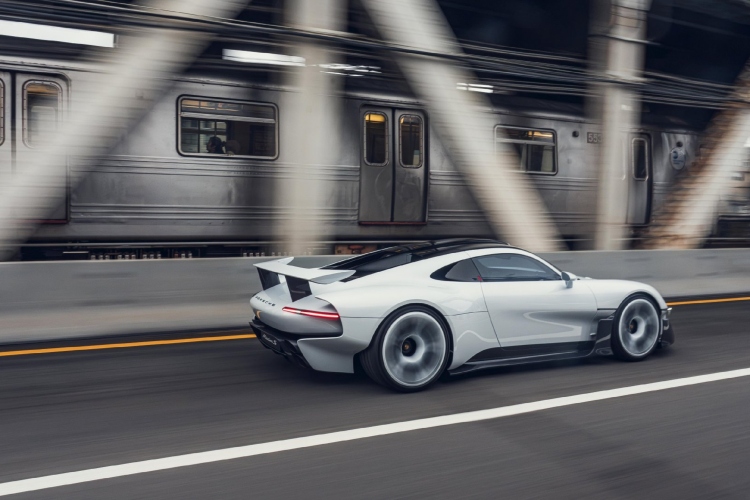
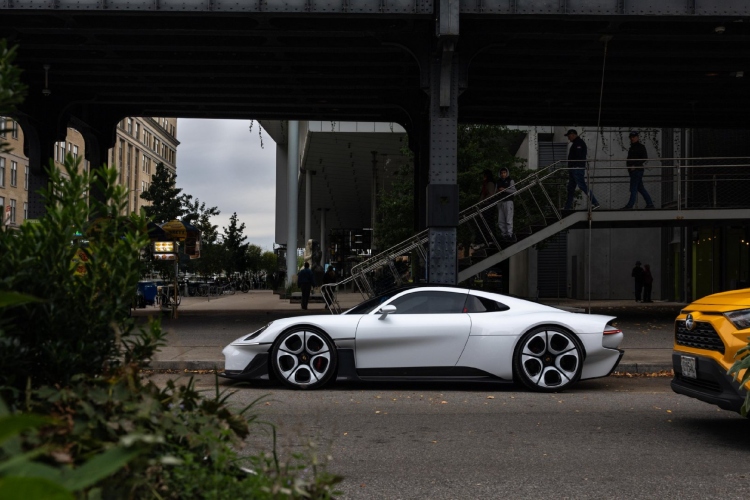
The characteristic round headlights and pronounced front fenders establish a direct connection with the Porsche 911, while the roofline descending beneath the rear spoiler recalls the legendary Porsche 959.
The low, almost flat front end takes inspiration from the racing-focused 911 GT1, while elements of the celebrated Carrera GT can also be recognized in the car's elongated silhouette.
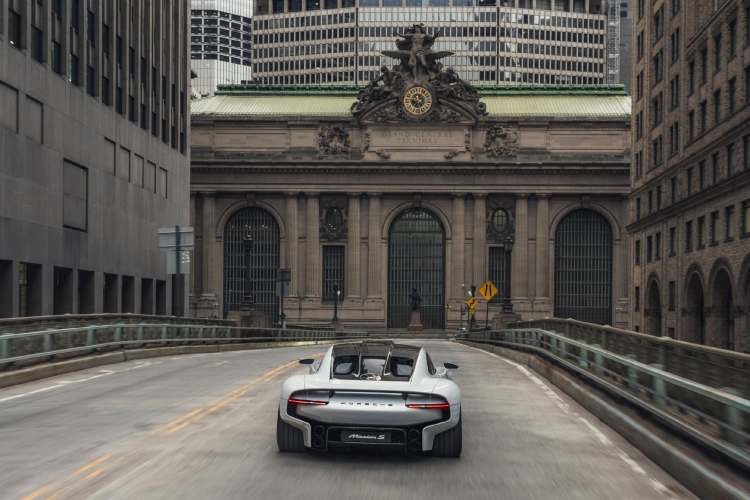
The rear section particularly emphasizes the concept's motorsport heritage, featuring a roof-mounted air intake, distinctive mirrors, and aerodynamic solutions reminiscent of Porsche's most extreme racing machines.
However, one detail attracts particular attention: a large horizontal engine-cooling fan inspired by the legendary Porsche 917 race car.
This feature is more than a nostalgic design reference. It has also fueled speculation about the possible powertrain of the future supercar.
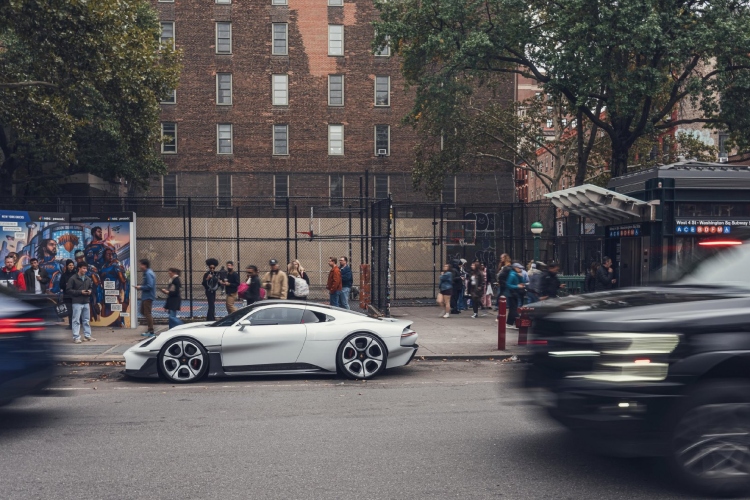
The wheels deserve special attention as well, reinterpreting the famous telephone-dial design associated with the Porsche 928.
The exterior color palette includes Firn White Metallic, Light Red Metallic, and Black Chrome, while the interior is finished in Special Black. These combinations draw inspiration from historic Porsche racing cars.
Together, these elements create a design that feels simultaneously familiar and completely new, celebrating the brand's extraordinary heritage without relying on a single retro-inspired formula.
An Interior Without a Giant Screen: The Return of Analog Driving
While most contemporary luxury car manufacturers are transforming their cabins into increasingly elaborate digital command centers, Porsche has taken a dramatically different approach with Mission S.
The interior draws inspiration from classic models such as the Porsche 550 Spyder and Porsche 356, featuring a low seating position, a horizontally arranged dashboard, and door lines designed to strengthen the driver's connection with the car.
The most fascinating detail is a collection of five circular instruments that physically change position depending on the selected driving mode.
Unlike modern digital instrument clusters, where graphics and layouts change on a screen, Mission S features actual mechanical movement of the instruments.
The centrally positioned tachometer retains a traditional analog appearance, further emphasizing Porsche's commitment to an authentic driving experience.
The steering wheel also features a striking red button labeled "On your own," designed to allow the driver to deactivate electronic assistance systems.
The sports seats incorporate five-point safety harness hardware, reinforcing the concept's unmistakable racing character.
Every element follows a single philosophy: the driver should remain the central figure in the automotive experience rather than merely the operator of a sophisticated digital system.
For enthusiasts who believe that driving pleasure comes from mechanical feedback, physical controls, and an uninterrupted connection with the road, this approach represents a particularly compelling vision of the future.
An iPhone Instead of a Central Touchscreen
One of the most unusual decisions in the interior design is the complete absence of a conventional central touchscreen.
Instead of a large multimedia display, Mission S features a retractable smartphone holder compatible with MagSafe technology.
This allows an iPhone to effectively serve as the navigation and information display, while the dashboard remains visually clean and focused on driving.
The approach creates an interesting contrast with prevailing trends in the luxury automotive industry, where manufacturers frequently use increasingly large screens to demonstrate technological sophistication.
With Mission S, however, Porsche suggests that advanced technology does not necessarily have to dominate the interior visually.
Although a vehicle with an unofficial estimated price of approximately €500,000 could accommodate virtually any multimedia system, the German manufacturer has chosen to emphasize ergonomics, mechanical controls, and direct communication between the car and its driver.
The result is a cabin that feels more like a purpose-built driving environment than a conventional luxury vehicle interior.
It is a reminder that technological innovation can sometimes involve removing unnecessary complexity rather than adding more features.
Could a Legendary Flat-Eight Engine Be Hiding Beneath the Bodywork?
The greatest mystery surrounding Mission S concerns its powertrain.
Porsche has not revealed which engine will power the eventual production model, but the large horizontal fan above the engine compartment has sparked speculation about the possible return of one of the most unusual engines in the company's history.
The engine in question is a flat-eight configuration, an arrangement Porsche experimented with on several occasions but never introduced into regular production for its road cars.
Back in 1969, the company built two Porsche 914/8 prototypes using a racing-derived flat-eight engine associated with the Porsche 908.
One example was connected with Ferdinand Piëch, while the other was presented to Ferry Porsche for his 60th birthday.
Much later, Porsche reportedly tested a more modern five-liter twin-turbocharged flat-eight engine installed in a development vehicle based on the Cayman.
According to available reports, this experimental engine produced approximately 750 horsepower and was capable of reaching an impressive 9,000 rpm.
The project was eventually discontinued, but the unveiling of Mission S has revived speculation about the possibility of bringing this unusual engine configuration back to life.
However, it is important to emphasize that Porsche has not confirmed that the new supercar will feature a flat-eight engine.
The presence of the large cooling fan is an intriguing design reference, but it does not constitute evidence of the vehicle's final mechanical configuration.
Nevertheless, the possibility alone is enough to capture the imagination of Porsche enthusiasts who appreciate the brand's most ambitious engineering experiments.
Gasoline and Hybrid Powertrains, but No Fully Electric Version
While the details of the specific engine remain unknown, the concept's reported technical direction offers an intriguing glimpse into Porsche's thinking.
The future family of mid-engine supercars is expected to accommodate conventional internal combustion engines, hybrid systems, and plug-in hybrid powertrains.
A fully electric version is reportedly not planned for this particular model family.
This decision is especially interesting at a time when much of the automotive industry continues to invest heavily in electrification.
Porsche appears determined to preserve the characteristics that have defined its identity for decades within the most exclusive segment of its lineup: engine sound, mechanical engagement, and an immediate sense of control.
At the same time, the possibility of hybridization leaves room for modern technological solutions that could enhance both performance and efficiency.
The combination of traditional combustion power and carefully integrated electrification could allow the future supercar to deliver exceptional performance without abandoning the emotional qualities that enthusiasts associate with Porsche.
Rather than pursuing technology for its own sake, Mission S suggests an approach in which every engineering decision is evaluated according to its contribution to the driving experience.
A €500,000 Supercar as Part of a New Business Strategy
Mission S is not merely a demonstration of Porsche's design and engineering ambitions. It also appears to be an important part of the company's broader business strategy.
According to information published by the German newspaper Handelsblatt, a strategy known as Sportwagenschmiede ’35 aims to significantly increase the average selling price of Porsche's most expensive vehicles.
The reported plan is to raise the average price of the 10,000 most expensive vehicles in the company's lineup from approximately €270,000 to €330,000 by 2030, representing an increase of around 22 percent.
Importantly, this objective applies exclusively to the uppermost segment of Porsche's portfolio rather than its entire model range.
Introducing a permanent supercar positioned above the 911 would allow the company to attract buyers seeking even more exclusive, powerful, and expensive vehicles.
Unlike limited-production projects such as the 918 Spyder, the new model could become a long-term symbol of Porsche's technological and design capabilities.
Although an official price has not been announced, unofficial estimates suggest a figure of approximately €500,000.
The final price will depend on the production configuration, selected powertrain, and market positioning.
If these expectations materialize, Mission S could occupy a particularly interesting position between Porsche's established high-performance sports cars and the world of ultra-exclusive supercars.
Could Porsche's New Supercar Above the 911 Change the Rules?
The unveiling of Mission S raises one of the most fascinating questions in Porsche's modern history: can the German manufacturer create a permanent family of supercars positioned above the legendary 911 without diminishing the status of its most iconic model?
The answer will depend largely on how much of the concept's character survives the transition to production.
If Porsche preserves its analog philosophy, mechanically moving instruments, striking design, and uncompromising focus on the driver, Mission S could become one of the most exciting sports cars of the coming years.
The potential return of a flat-eight engine would only increase its appeal among collectors, although such a configuration remains entirely speculative at this stage.
Beyond its possible performance figures or market positioning, the concept also makes a broader statement about the future of high-end sports cars.
In an era increasingly defined by digital interfaces, electronic assistance systems, and electrified powertrains, Porsche is exploring the possibility that the ultimate luxury might be a more direct, emotional, and engaging connection between driver and machine.
Porsche Mission S represents an ambitious vision of a new era for the German manufacturer—one in which its most prestigious automobile may not necessarily be the one with the largest screen or the most advanced electric powertrain, but the one that delivers the purest and most intense driving experience.